How AI Is Transforming Nail Design: Virtual Try-On & Digital Manicure Concepts
Quick Answer (Technology Overview)
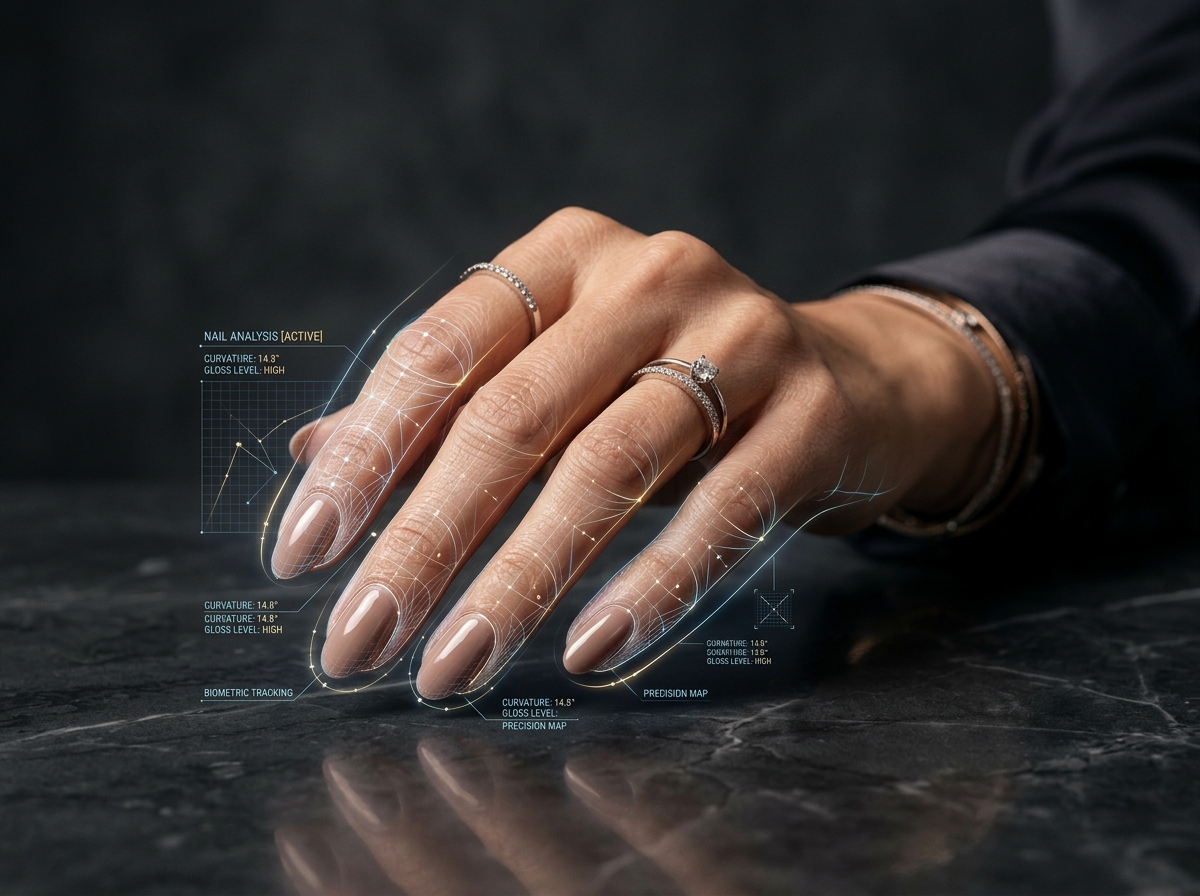
AI nail design combines real-time hand tracking, biometric contour segmentation, and generative aesthetic synthesis. By calculating skin undertones, finger proportions, and lighting conditions, virtual try-on tools allow consumers to preview complex Korean jelly gradients, chrome finishes, and architectural 3D nail shapes on their own hands prior to salon application.
Key Takeaways
- Biometric Nail Segmentation: Deep neural networks isolate the nail bed with sub-millimeter precision.
- Lighting & Specular Shaders: Simulates authentic light refraction through translucent syrup gels.
- Aesthetic Formulation Prompts: Translates abstract moodboards into precise salon technique recipes.
- Eliminates Salon Surprises: Bridges communication gaps between client expectations and technician execution.
The Next Frontier of Beauty Discovery
For decades, choosing a manicure design relied on physical salon swatch rings or static social media screenshots that rarely translated accurately to different hand silhouettes or skin tones. AI is fundamentally reshaping this discovery loop by making manicure visualization dynamic, personal, and photorealistic.
How Virtual Nail Try-On Works: 3 Technical Pillars
- Biometric Hand Landmark Mapping: Computer vision models detect 21 key skeletal landmarks on the hand, identifying the exact boundary of the eponychium, lateral sidewalls, and natural hyponychium free edge.
- Skin Tone & Lighting Color Calibration: Algorithms analyze ambient lighting color temperature (warm vs. cool) to correct digital pigment saturation, ensuring a translucent syrup gel looks true-to-life on camera.
- Physically-Based Gel Shaders: Instead of applying flat 2D color masks, advanced rendering engines simulate multi-layer optical refraction, chrome mirror reflectivity, and clear 3D resin dewdrops that move realistically with hand gestures.
Digital Concept vs. Salon Execution
| Process Stage | AI Digital Simulation | Human Technician Artistry |
|---|---|---|
| Shape & Proportions | Instant testing of almond, oval, coffin, squoval | Physical filing and balancing of natural nail apex |
| Color Harmonies | Real-time testing against skin undertone | Hand-mixing custom potted gel syrup ratios |
| Art Composition | Generates prompt recipes and moodboards | Precision brush linework, 3D resin sculpting, LED curing |
The NAILYZA AI Vision
At NAILYZA, we are actively pioneering the intersection of luxury nail editorial and generative technology. Our upcoming NAILYZA AI suite is designed not as a replacement for skilled technicians, but as an interactive aesthetic laboratory that empowers beauty enthusiasts to explore, formulate, and communicate their next manicure obsession with clarity.
Frequently Asked Questions
How does AI nail design work?
AI nail design uses computer vision hand tracking to identify nail contours and render realistic 3D gel shaders aligned with lighting and skin tone.
Can AI generate custom nail art prompts?
Yes. Generative models translate aesthetic keywords (e.g. "Almond shape, glazed syrup, soft luxury mood") into technical nail recipes for salon reference.
Related NAILYZA Guides
- Pillar Hub: AI Nail Design & Technology Collection →
- Trend Forecast: The NAILYZA 2026 Global Nail Trend Forecast →
- Korean Syrup Art: What Are Korean Jelly Nails? 2026 Guide →
- About the Brand: About NAILYZA's Editorial & Technology Mission →